Voice and shruti
Comfortable breath, tone placement and accurate singing with the tonic.

INDIAN CLASSICAL · VOICE
Build a strong musical ear and expressive voice through the South Indian classical tradition, with careful work on shruti, swara, raga and tala.
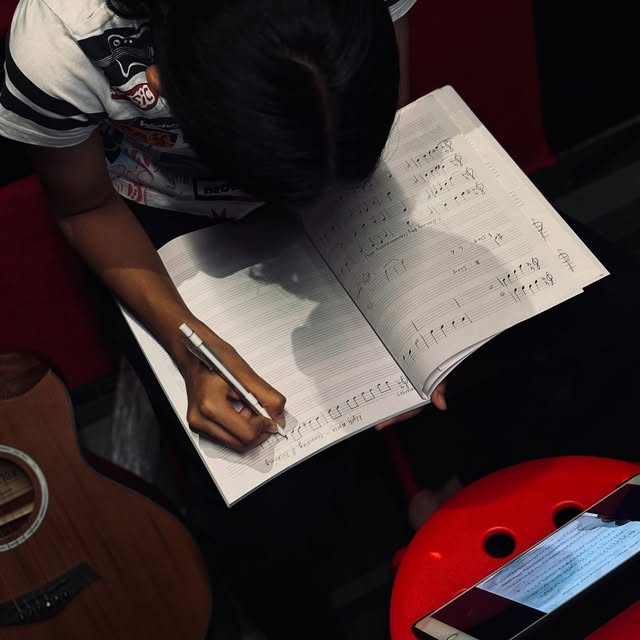 INDIAN CLASSICAL
WHAT STUDENTS LEARN
Lessons combine technique, listening, reading and repertoire. Teachers adjust the balance to suit the student’s age, experience and musical goals.
Comfortable breath, tone placement and accurate singing with the tonic.
Foundational patterns that develop pitch, agility and listening.
Internalise rhythmic cycles and recognise melodic character.
Learn suitable geethams and songs with meaning, clarity and expression.
A TYPICAL FIRST YEAR
This is a practical guide, not a fixed promise. Starting level, attendance, practice and individual readiness shape the exact pace.
Shruti alignment, voice culture, sarali varisai and simple tala keeping.
Janta and dhaatu patterns, alankaras and stronger pitch consistency.
Raga awareness, listening practice and selected beginner compositions.
Improve diction, expression and confidence through a prepared presentation.
INDIAN CLASSICAL FOUNDATION
The first year centres on strong fundamentals and attentive listening. Progress is demonstrated through secure technique, accurate musical recall and increasingly confident presentation.
BEFORE YOU BEGIN
Your trial class helps us understand the student’s interests, current ability and the right next step.
Meet the teacher, explore the course and find the right learning path.