Comfort and control
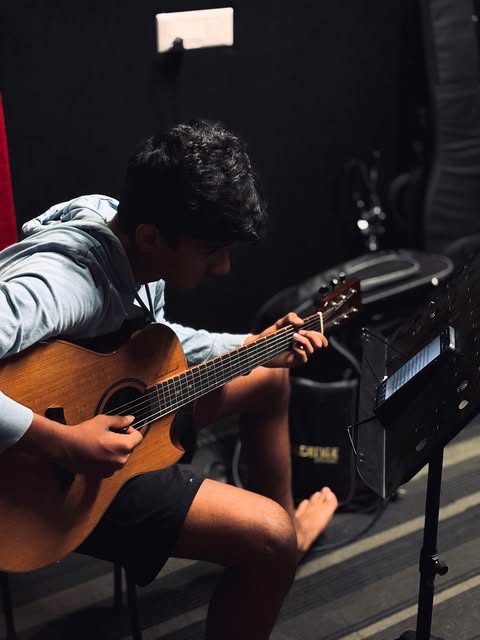
Posture, tuning, fretting, picking and clean sound production.

STRINGS · ABRSM & TRINITY
Turn chords, rhythm and melody into complete songs. Students build a reliable foundation and may work toward an ABRSM or Trinity pathway.
 ABRSM + TRINITY
WHAT STUDENTS LEARN
Lessons combine technique, listening, reading and repertoire. Teachers adjust the balance to suit the student’s age, experience and musical goals.
Posture, tuning, fretting, picking and clean sound production.
Essential chord shapes, transitions, strumming and steady time.
Single-note playing, notation or tab, phrasing and ear training.
Build a varied set, play with others and develop stage confidence.
A TYPICAL FIRST YEAR
This is a practical guide, not a fixed promise. Starting level, attendance, practice and individual readiness shape the exact pace.
Instrument care, open strings, first chords, pulse and short melodies.
Smooth chord changes, strumming patterns, reading and complete songs.
Scales, fingerstyle, expressive detail and ensemble awareness.
Polish a balanced set and review readiness for a suitable exam pathway.
EXAM PATHWAY
We use current official syllabus information to guide exam preparation. The teacher recommends a board, grade and timeline after understanding the student’s level, goals and learning pace.

Lessons can include the repertoire, technical work and supporting musicianship appropriate to the student’s chosen assessment.
Explore official ABRSM instruments and exams ↗
Lessons can connect repertoire, technique and supporting skills to an appropriate Trinity grade when the student is ready.
Explore official Trinity music exams ↗BEFORE YOU BEGIN
Your trial class helps us understand the student’s interests, current ability and the right next step.
Meet the teacher, explore the course and find the right learning path.